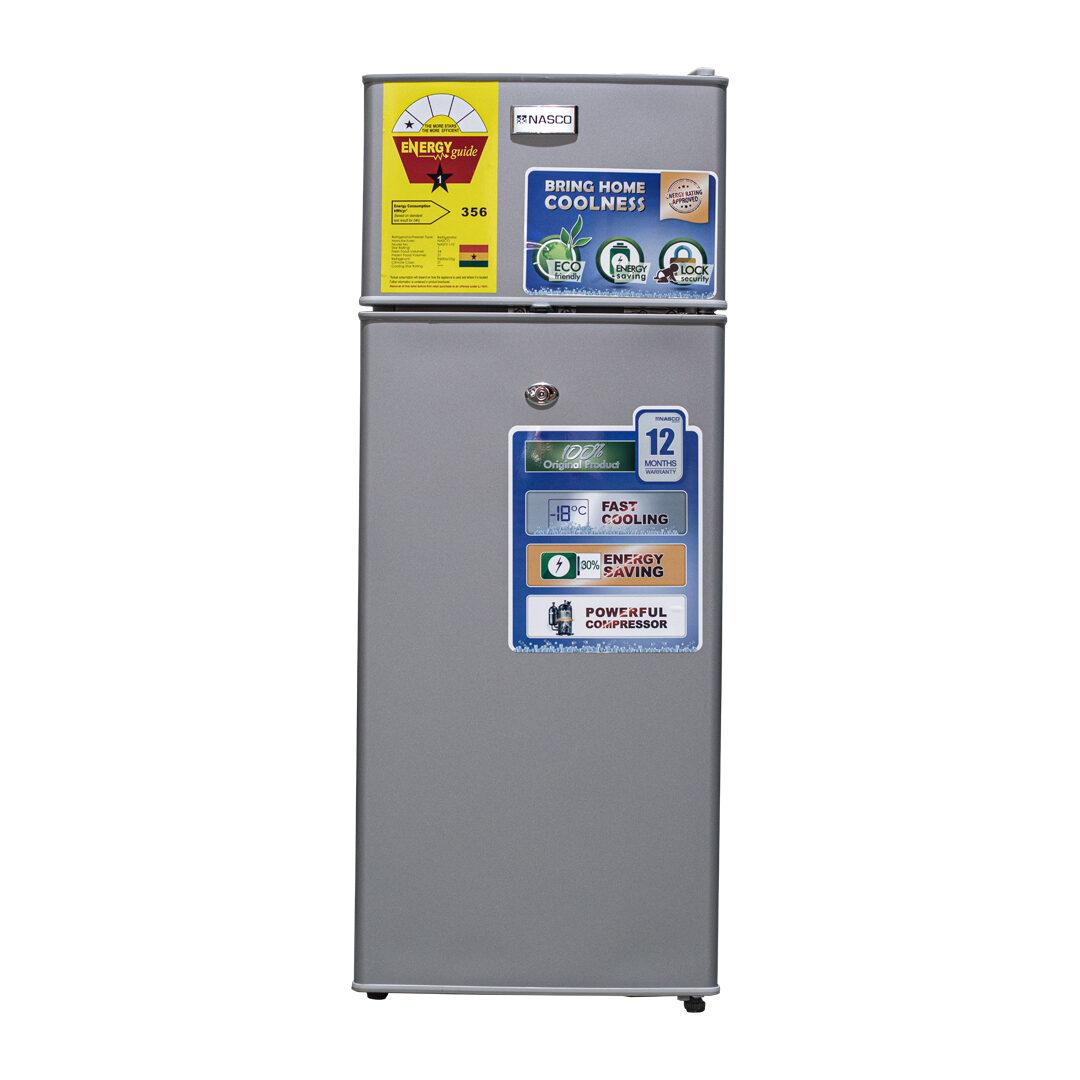
The NASCO NASF2-130 is a compact top freezer / double door refrigerator with 110 litres gross storage capacity. It’s positioned for small households, self-contained flats, students, or those who need a modest-sized fridge with freezer section. The freezer is on top (a “top freezer” style), while the lower section is for fresh food. It comes with practical features like a lock & key, interior light, and manual defrost. It's designed as a budget option — fulfilling basic cooling needs rather than premium features.
Key Specifications
Specification
Detail
Gross Storage Capacity
110 L
Fresh Food Compartment Capacity
~71 L
Freezer Capacity
~31 L
Energy Consumption
~380 kWh/year
Energy Efficiency Rating
1-star
Defrost System
Manual defrost
Door Style
Double door, top mounted freezer on top section, fresh food section below
Additional Features
• Adjustable thermostat / temperature controls • Interior light • Lock & key • Direct (or “normal”) cooling rather than frost-free in many listings (i.e. no auto defrost)
Refrigerant
R600a (32 g)
Rated Voltage / Frequency
220-240 V / around 50 Hz (as used in Ghana)
Power / Input
~100 W input power; current draw ~0.60 A
Net Weight
Approximately 25 kg
Dimensions (W×D×H)
~42 × 41 × 99 cm
Strengths / Advantages
Here are some of the good points for this fridge:
Compact Footprint It is fairly small (about 42 cm wide, 41 cm deep, 99 cm high) making it suitable for limited kitchen space, small flats, or areas where space is limited.
Adequate Freezer for Small Needs The top freezer (~31 L) is enough to store ice, frozen treats, some meats etc., without being overly large. For households that don’t need huge freezer storage, this is sufficient.
Essentials Included The light, lock & key, and adjustable thermostat are useful features. Having a lock can be important in some settings. The interior light helps especially in areas with lower ambient lighting.
R600a Refrigerant R600a is more environmentally friendly than older refrigerants, more energy-efficient when properly used, though many other aspects (insulation, defrosting type) affect overall efficiency.
Lower Price / Budget Option While it doesn’t have premium features like frost-free, water dispenser, or digital display, the trade-off is a lower cost both in purchase and maintenance. If you need basic refrigeration reliably, this is good value.
Suitability / Use-Case
This fridge is best suited for:
Single persons, couples, small families (1-3 people), where food volume is modest.
Places with moderate electricity reliability, where the cost of electricity is a concern.
Users who don’t require large frozen storage or advanced features.
Dorms, small shops, guest houses, or as secondary fridge/freezer.
Situations where initial cost and simplicity are priorities over advanced features.
It might be less suitable for:
Large households or families who cook large quantities and store frozen food in bulk.
Very hot or high-humidity climates with frequent power fluctuations unless providing high insulation or suitable backup power.
Users expecting frost-free or very rapid cooling performance.
Tips for Best Use & Maintenance
To maximize its lifespan and minimize running cost you should:
Ensure good ventilation around the fridge — leave space behind and above for heat dissipation.
Defrost regularly, before the ice buildup gets too heavy. Thick ice layers reduce cooling efficiency and increase energy consumption.
Avoid overloading — too much food reduces airflow, and warms inside.
Pre-cool items when possible (i.e., letting hot food cool to room temperature before placing in fridge).
Check door seals so cold air doesn’t leak. Replace if worn.
Maintain correct temperature settings — don’t set too cold if not necessary; moderate settings save energy.
Stable power supply or surge protection helps protect the compressor.